
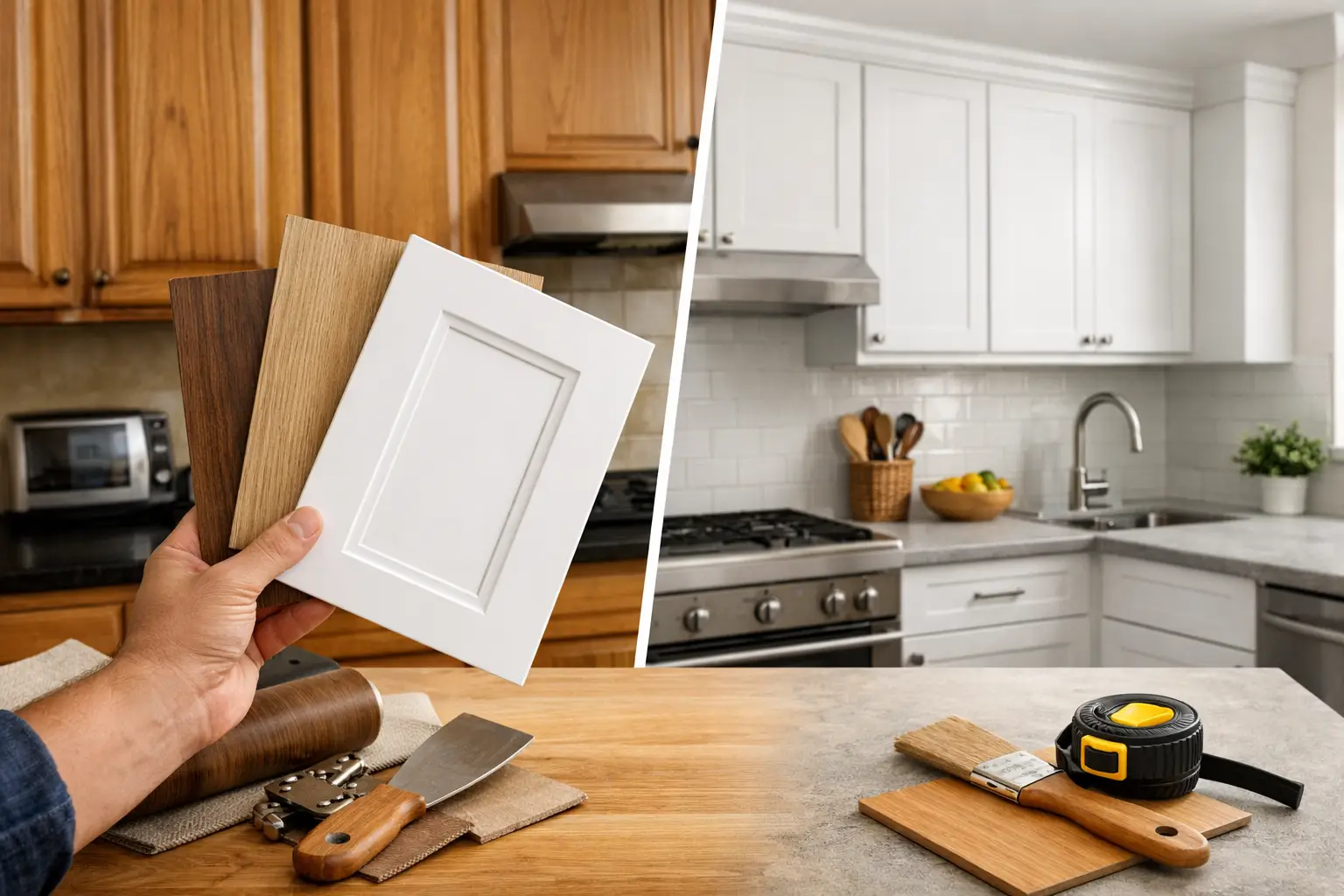
A kitchen can look tired long before its cabinets are worn out. Dated door profiles, faded finishes, limited storage and hardware that no longer suits your style can make the whole room feel overdue for change. Knowing how to choose cabinet refacing starts with one practical question: are your existing cabinet boxes still solid enough to deserve a second life?
For many Barrie and Simcoe County homeowners, the answer is yes. Refacing retains the cabinet structure, replaces doors and drawer fronts, and applies a new finish to the visible cabinet surfaces. The result can be a major visual change with less disruption, less waste and a more manageable cost than a full cabinet replacement. It is not the right solution for every kitchen, however. A careful assessment of your cabinets, goals and renovation partner will help you make a decision you feel good about for years.
Start With the Condition of Your Cabinet Boxes
Cabinet refacing depends on a sound foundation. Before looking at colours or door styles, inspect the cabinet boxes themselves. Quality boxes that are level, firmly secured and free from serious water damage are often excellent candidates for refacing. Solid plywood or well-built particleboard cabinets can continue serving a kitchen well when properly updated.
Open doors and drawers, look beneath the sink, and check the interiors of lower cabinets. Minor wear, such as scuffs, worn hinges or outdated drawer slides, can usually be addressed during an upgrade. Structural concerns deserve a closer look. Swollen cabinet bases from leaks, crumbling material, loose wall cabinets, significant warping or persistent mould may mean replacement is the safer choice.
Layout matters too. Refacing works especially well when your existing kitchen footprint functions well. If the sink, appliances and work areas are in sensible locations, there may be no need to take on the added cost and disruption of moving plumbing, electrical or walls. You can still improve the room substantially with new cabinetry fronts, mouldings, countertops, lighting and storage accessories.
Decide What You Want the Renovation to Solve
A successful kitchen update is about more than replacing an old oak finish with a new colour. Think about the daily frustrations that prompted the project. Perhaps the kitchen feels dark, pantry storage is inadequate, drawers stick, or the design no longer fits how your family uses the room.
Refacing can improve appearance while creating opportunities for practical upgrades. You may be able to add pull-out shelves, drawer organizers, a recycling centre, new pantry components, soft-close hardware or a better layout within selected cabinet sections. In some cases, refaced cabinets can be paired with a few new custom units, such as a pantry cabinet or an island, to solve a specific storage problem without replacing everything.
Be realistic about the limits. If you need to move major appliances, add extensive cabinetry, remove a wall or completely redesign the flow of the room, new cabinets may offer better value in the long run. The best choice is not automatically the least expensive option. It is the option that addresses your priorities without paying for work your kitchen does not need.
Choose a Door Style That Fits Your Home
Doors and drawer fronts define the finished look of a refaced kitchen. A showroom visit is valuable because a door can look very different in person than it does in a photograph. You can see the true colour, feel the finish, compare profiles and consider how materials work with your flooring, backsplash and countertops.
For a clean, current look, many homeowners choose simple shaker-style doors in warm whites, soft greys, natural wood tones or deeper colours such as navy and charcoal. Raised-panel doors can suit more traditional homes, while flat-panel styles create a quieter contemporary appearance. The right selection should complement the home rather than chase a short-lived trend.
Consider how much visual detail your kitchen can carry. In a compact room, a simple door profile and lighter finish can help the space feel more open. In a larger kitchen with good natural light, deeper colours or a two-tone design can add warmth and definition. Sample doors should also be viewed under your kitchen lighting, particularly if the room is used heavily in the evening.
Compare Finish Quality, Not Just Colour
A refacing project should be evaluated by what is beneath and around the new doors, not only by the door colour. Ask what material will be used to finish cabinet frames, exposed ends, toe kicks and panels. A carefully matched, durable finish is what makes a refaced kitchen look cohesive rather than like new doors were simply added to old boxes.
Different products have different strengths. Thermofoil can provide a smooth, consistent surface and is often a budget-conscious option. Painted or stained wood products offer character and a wide range of design possibilities, but may need more care in high-use areas. High-quality laminate options can be durable and practical for busy households. Your choice should reflect the look you want, how the kitchen is used and the maintenance you are comfortable with.
Ask to see samples of the actual door and finishing materials, not just a small colour chip. Discuss cleaning recommendations as well. A finish that suits a quiet household may not be the best fit for a family kitchen with children, pets and frequent cooking.
Plan for Storage and Function While the Kitchen Is Open
Refacing is an ideal time to make targeted improvements that make the kitchen easier to live in. Replacing cabinetry fronts without considering function can leave you with a beautiful kitchen that still has the same daily annoyances.
Think through the cabinets you use most often. Deep lower cabinets may benefit from roll-out trays. A narrow opening might become a pull-out spice cabinet. Drawer dividers can bring order to cutlery and utensils, while a pull-out waste and recycling unit can free up valuable floor space. New drawer slides and soft-close hinges can also make older cabinetry feel far more refined.
These upgrades should be selected around your habits, not added simply because they are popular. A homeowner who cooks often may value accessible pots, pantry goods and spices. Someone preparing a home for sale may focus on the visible details that signal a well-cared-for kitchen, such as modern hardware, soft-close doors and organized storage.
Set a Clear Budget With Room for Related Work
Cabinet refacing is commonly less costly than a full replacement because it preserves cabinet boxes and avoids much of the demolition. Still, the total investment varies based on kitchen size, door style, material selection, storage upgrades and the amount of finishing work required.
Build your budget around the complete result you want. New doors may lead naturally to a new countertop, backsplash, sink, faucet or lighting. None of these additions is mandatory, but overlooking them early can make the final cost feel unexpected. A written estimate should clearly separate the cabinet refacing work from optional upgrades so you can make choices with confidence.
Avoid choosing solely on the lowest initial quote. A lower price can reflect fewer finish details, lower-grade materials, limited preparation or unclear installation standards. Quality workmanship is especially visible at cabinet edges, end panels, mouldings, alignment and transitions around appliances. Those details affect how polished the kitchen looks every day.
Choose an Experienced Local Refacing Specialist
The installer is as important as the product. Cabinet refacing requires accurate measuring, careful preparation and skilled finishing so new components fit the existing structure properly. Look for a company that can assess whether refacing is appropriate, explain alternatives honestly and show you the range of door, colour and storage options available.
During your consultation, ask how the project will be measured, how long installation is expected to take and what steps will be taken to protect your home. You should also understand who will complete the work, whether the company is licensed and insured, and how changes or unexpected issues will be handled. Clear answers are a sign of a professional process.
Local experience has real value. A company that has worked in the community for decades understands the homes, styles and expectations of area homeowners. Barrie Kitchen Saver brings more than 35 years of local renovation experience to conversations about refacing, new cabinetry and custom storage, helping homeowners choose the approach that suits both their kitchen and their budget.
Make the Decision With Samples and a Full Picture
Before approving the work, review the plan as a whole: door style, finish, hardware, panels, mouldings, storage accessories and any related countertop or backsplash work. Confirm which existing cabinets will remain, which components will be replaced and where new cabinetry may be added. This is also the time to confirm installation timing and how your kitchen will be managed during the project.
The right refacing decision should feel practical as well as exciting. When your cabinet boxes are sound, your layout still works and the new design solves the issues that matter to you, refacing can give your kitchen a fresh, finished look without the upheaval of starting from scratch. Take time to see the materials in person, ask direct questions and choose craftsmanship that will still make you proud when the renovation is no longer new.