
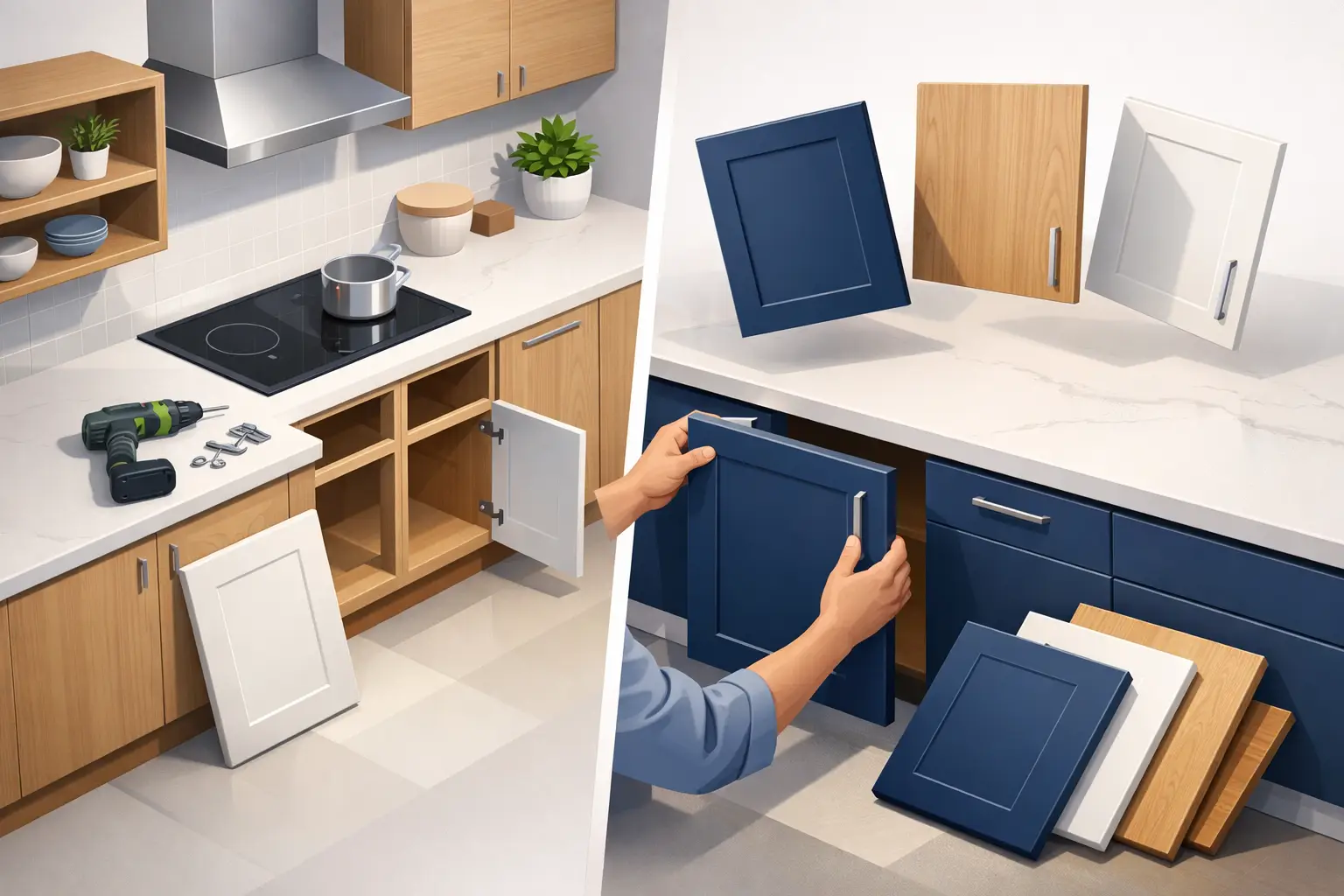
A kitchen can look tired long before its cabinet boxes have reached the end of their useful life. If you are considering whether to replace cabinet doors only, the answer may be yes – but the right solution depends on what is behind those doors, what will remain visible, and the result you expect when the work is done.
For many Barrie and Simcoe County homeowners, cabinet door replacement is a sensible way to refresh a dated kitchen without taking on the cost and disruption of a full renovation. The key is being realistic about the condition of the existing cabinetry and choosing a finish plan that looks intentional rather than pieced together.
When You Can Replace Cabinet Doors Only
Replacing doors and drawer fronts can work very well when your existing cabinet boxes are solid, properly installed, and still suit the layout of your kitchen. A cabinet that is structurally sound does not need to be discarded simply because its doors are oak, faded thermofoil, scratched laminate, or from another era.
This approach is often a good fit when you like the location of your sink, appliances, and storage, but want a more current style. New Shaker doors, slab fronts, updated handles, and soft-close hardware can substantially change the feel of the room. It is also useful for homeowners preparing a property for sale, where a clean and coordinated kitchen can improve first impressions without requiring a full rebuild.
The cabinet boxes need to be in good shape. Look for firm side panels, secure shelves, doors that are not hiding warped frames, and no evidence of ongoing water damage beneath the sink or near the dishwasher. Minor wear can sometimes be addressed, but swollen particleboard, deteriorated bottoms, or loose construction may point to replacement rather than a cosmetic update.
Just as important, make sure the existing layout serves your household. New doors can improve appearance, but they will not create a pantry, widen a narrow work area, or solve a lack of drawer storage. If the kitchen functions well, replacing fronts may be exactly the focused update you need. If daily frustrations come from the layout itself, it may be wiser to consider refacing with storage upgrades or new cabinetry.
Doors Only vs. Cabinet Refacing
The phrase “doors only” can mean different things in practice. In the strictest version, new doors and drawer fronts are installed while the visible cabinet frames, end panels, and toe kicks remain as they are. This can be an effective choice if those exposed surfaces already coordinate with the new doors or can be refinished successfully.
The challenge is that many kitchen cabinets have visible face frames or exposed box ends. A bright new white door beside a yellowed oak frame, for example, will make the old material more noticeable, not less. The same is true when the new door style is clean and contemporary but the surrounding cabinet structure has a heavy traditional profile.
Cabinet refacing takes the update further. Along with new doors and drawer fronts, the exposed cabinet surfaces are covered or refaced in a compatible material and colour. The finished kitchen has a more unified appearance while retaining the cabinet boxes that are still worth keeping. It is often the better answer for homeowners seeking the look of new cabinets without the cost, demolition, and extended timeline of a complete replacement.
Neither option is automatically better. Doors only can be more economical for a small project or for cabinetry with paintable frames in excellent condition. Refacing is usually the stronger visual choice when many cabinet surfaces remain visible. An experienced in-home assessment can clarify which approach makes sense before you commit to a style or colour.
What to Check Before Ordering New Doors
Cabinet doors are not one-size-fits-all. Accurate measurements are essential, especially with older kitchens where openings may vary slightly from one cabinet to the next. Door overlay, hinge placement, drawer-front spacing, and the amount of frame left visible all affect how the finished cabinetry will look and operate.
Before selecting a door, assess these practical details:
- Box condition: Check for water damage, sagging shelves, loose joints, and damaged cabinet bottoms.
- Frame style: Determine whether the cabinet has a face frame, frameless construction, decorative moulding, or exposed ends that require finishing.
- Door function: Note any doors that rub, openings that are out of square, and hinges that need replacement or adjustment.
- Future plans: Consider whether you may soon replace counters, flooring, backsplash, or appliances, since these choices should work together.
A professional measurement and design consultation helps avoid a common disappointment: installing attractive new fronts only to discover that the proportions, hinge locations, or surrounding finishes do not suit the kitchen. It also provides an opportunity to improve the details that make a kitchen easier to use, such as soft-close hinges, full-extension drawer slides, pull-out waste storage, or better-organized drawers.
Choosing a Style That Will Age Well
Door replacement gives you a broad range of design options, but the best choice is not always the trendiest one in the showroom. Think about the rest of your home, the amount of natural light in the kitchen, and how long you expect to enjoy the renovation.
Shaker-style doors remain popular because they work in both traditional and contemporary homes. Flat-panel doors offer a simpler, more modern look and can make a compact kitchen feel calmer. Raised-panel doors may suit a more formal space, particularly when they complement existing trim and furniture elsewhere in the home.
Colour deserves the same care. White and soft neutral finishes can brighten a dark kitchen, while medium wood tones add warmth without making the room feel heavy. Deep blue, green, or charcoal cabinetry can be striking, but it is often most successful on an island or lower cabinets rather than throughout a small room. Bring samples into the space and view them in morning, afternoon, and evening light before deciding.
Hardware is a comparatively small investment with a large visual effect. It should be selected with the door profile, faucet, lighting, and appliance finishes in mind. There is no rule that every metal must match exactly, but the overall combination should feel deliberate.
Cost, Timing, and What Affects Both
Replacing cabinet doors only is generally less costly than installing entirely new cabinets because the existing boxes remain in place. It can also reduce the mess associated with demolition and keep a kitchen more usable during the project. However, the price is not based on doors alone.
The number of doors and drawer fronts, their material and finish, custom sizing, hardware, finishing work on exposed frames, and any storage upgrades all influence the final investment. A large kitchen with many custom-sized doors may cost more than a small new cabinet installation in another situation. That is why a tailored estimate is more useful than a broad online price range.
Timing also depends on the scope. Door manufacturing, finish selection, site preparation, and installation all need to be coordinated. If you are changing countertops, backsplash, or appliances at the same time, sequencing matters. Planning the project as one coordinated update can prevent unnecessary adjustments later.
When New Cabinets Are the Better Investment
There are cases where replacing doors is not the best use of your budget. If cabinets are poorly built, heavily damaged, or arranged in a way that makes cooking and storage difficult, putting money into new fronts may only postpone a larger renovation.
New cabinetry offers the greatest freedom to change the layout, add drawers, build a pantry, accommodate accessibility needs, or create storage tailored to your household. It is also the right option when cabinet boxes have suffered significant moisture damage or when structural repairs would become too extensive.
For homeowners who are unsure, it helps to think beyond the immediate appearance of the doors. Ask whether you want the kitchen to look better, work better, or both. A fresh door style can accomplish the first goal beautifully. A larger cabinetry plan may be needed for the second.
Barrie Kitchen Saver helps homeowners weigh these options with the benefit of more than 35 years of local renovation experience. A careful consultation can identify what is worth preserving, where an upgrade will make the greatest difference, and which finishes will give your kitchen a polished, lasting result.
The best kitchen update is not always the largest one. When the cabinet structure is sound and the layout still supports your life at home, new doors or a complete refacing can give the room a proud new beginning while respecting the value already built into it.