
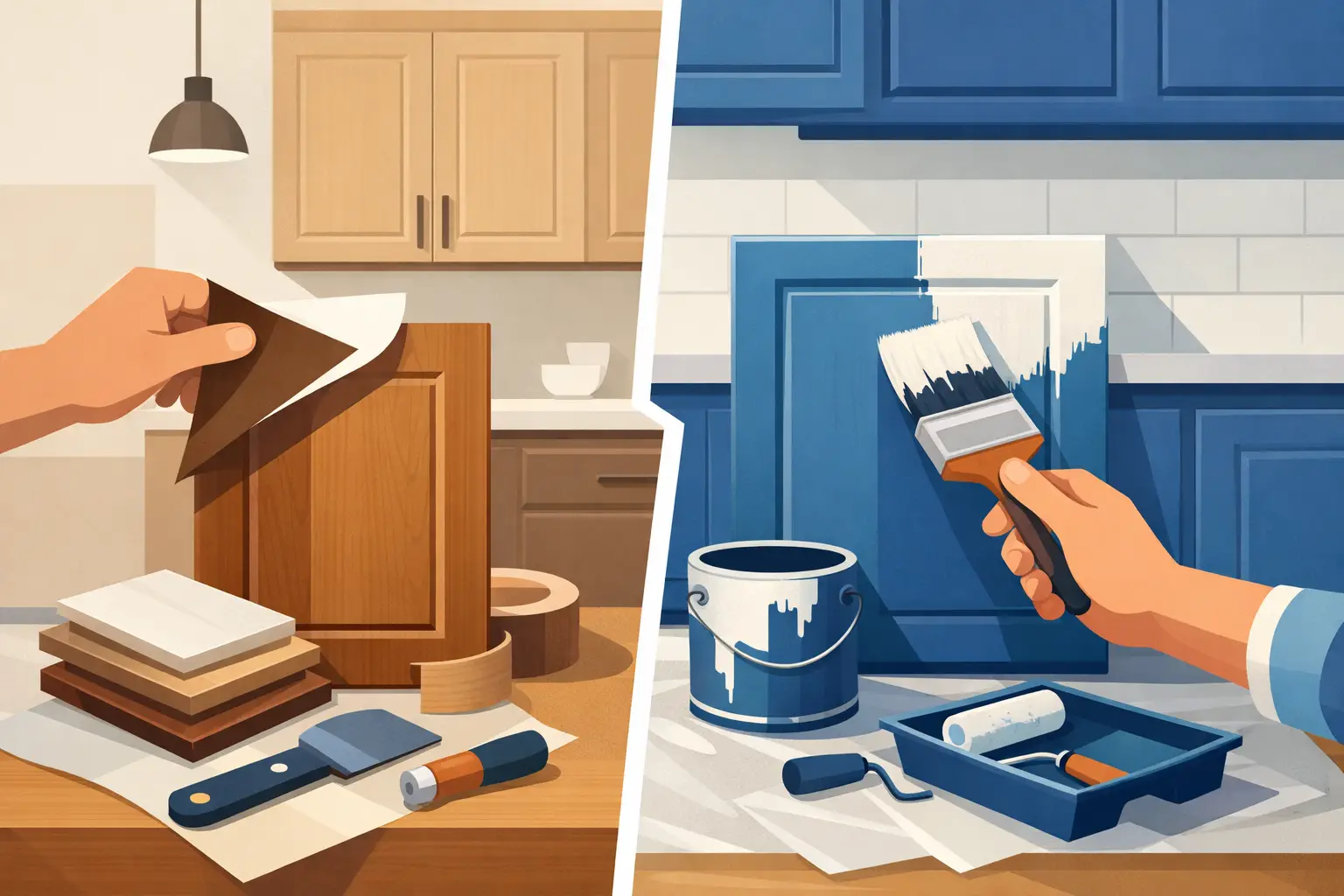
A kitchen can look tired long before it stops working. That is why many homeowners start by asking what is cabinet refacing vs painting, and which one will actually make the biggest difference without turning the whole house upside down.
The two options are often mentioned together, but they are not the same kind of update. Painting changes the surface finish of your existing cabinet doors and boxes. Refacing keeps the cabinet boxes in place, covers the visible cabinet surfaces with new material, and replaces the doors, drawer fronts, hinges, and often the hardware. Both can refresh a kitchen. The right choice depends on the condition of your cabinets, the look you want, and how long you expect the result to last.
What is cabinet refacing vs painting in practical terms?
The easiest way to understand the difference is to look at what stays and what changes.
With cabinet painting, your current doors and drawer fronts remain in use. They are cleaned, sanded or prepped, primed, and painted. The cabinet boxes are also painted on the visible exterior surfaces. If your doors are in decent condition and you like their shape and style, painting can be a reasonable cosmetic update.
With cabinet refacing, the existing cabinet boxes stay, but the visible exterior surfaces are covered with a new veneer or laminate, and the old doors and drawer fronts are replaced with new ones. That means you are not just changing colour. You are changing much of what you see and touch every day.
For homeowners with solid cabinet layouts but dated finishes, refacing often feels closer to a true renovation result. Painting is usually more limited because it works within the style and wear of what is already there.
When painting makes sense
Painting can be a good fit when your cabinets are structurally sound, your door style is still attractive, and your main goal is to brighten or modernize the space at the lowest upfront cost.
For example, if you have simple shaker-style doors that are still in good shape, a professionally applied painted finish may give the kitchen a cleaner, fresher appearance. It can also be useful if you are preparing a home for sale and want an update that improves first impressions without a larger investment.
That said, painting is not a magic fix for every kitchen. If cabinet doors are warped, heavily chipped, swollen from moisture, or made from materials that do not hold paint well over time, the result may disappoint. Paint also does not change the door profile. If the doors look dated because of their design, not just their colour, painting may leave the kitchen looking only partly updated.
When refacing makes more sense
Refacing makes sense when the cabinet boxes are in good condition but the doors, drawer fronts, and exterior finishes make the kitchen look older than it should.
This approach is especially appealing for homeowners who want a more noticeable transformation without the cost and disruption of removing the entire kitchen. New doors and drawer fronts can completely change the style of the room, whether you want a more classic look, a cleaner modern profile, or a warmer wood-tone finish.
Refacing also tends to deliver a more consistent finished appearance. Because the doors and drawer fronts are new, you are not trying to hide years of wear under paint. You are giving the kitchen a new exterior while keeping the parts that still serve their purpose well.
In many cases, refacing can also be combined with practical upgrades such as new hardware, soft-close hinges, drawer improvements, or added storage features. That gives homeowners a chance to improve both appearance and function at the same time.
Appearance and design flexibility
This is where the difference becomes more obvious.
Painting gives you a colour change. Refacing gives you a style change and a colour change. That is an important distinction.
If your current doors have an arch, raised panel, heavy trim, or an older profile that dates the kitchen, painting them white or greige will not fully change that impression. The kitchen may look cleaner, but it will still reflect the original design era.
Refacing allows you to choose new door styles, finishes, and colours that better match your home and taste. For many homeowners, that flexibility is the biggest advantage. A kitchen that once felt stuck in the past can look current and intentional without a full gut renovation.
In a showroom setting, this difference becomes even easier to see. Looking at door styles, materials, and finish options side by side helps homeowners understand how much more control refacing offers over the final look.
Durability and long-term results
Durability is one of the biggest trade-offs in the cabinet refacing vs painting decision.
A professionally painted cabinet can look very good, but painted surfaces are still vulnerable to chips, scratches, and wear over time, especially around handles, corners, and high-use doors. Kitchens are hard-working spaces. Steam, grease, cleaning products, and repeated touching all affect finish performance.
Refacing generally holds up better because the doors and drawer fronts are manufactured for cabinetry use, and the exposed cabinet surfaces are covered with durable matching materials. The result tends to be more consistent and more resistant to the kind of everyday wear that shows up quickly on painted wood or MDF surfaces.
This does not mean painting is always the wrong choice. It means homeowners should be realistic. If you want the best chance of a longer-lasting, furniture-like finish, refacing usually has the edge.
Cost: cheaper now versus better value over time
Painting usually costs less than refacing at the start. For some households, that alone makes it worth considering.
But lowest price and best value are not always the same thing. If painting leaves you with old door styles, visible wear issues, or a finish that needs touch-ups sooner than expected, the savings may feel smaller over time. Refacing costs more because it involves new doors, drawer fronts, materials, and installation work. In return, you get a more substantial visual upgrade and often a more durable result.
For many homeowners in Barrie and Simcoe County, the better question is not simply which option is cheaper. It is which option gives the kitchen the result you actually want, without paying for a full replacement you may not need.
That middle ground is exactly why refacing has remained a strong choice for so many years.
Is your kitchen a good candidate for refacing?
Not every kitchen should be refaced, and a trustworthy renovation company will say so.
Refacing works best when the cabinet boxes are solid, properly installed, and the existing layout still functions well. If the boxes are damaged, poorly built, or the kitchen needs a major redesign, full replacement may be the better path.
On the other hand, if the layout works, the storage is mostly adequate, and the main issue is that the kitchen looks dated, refacing can be the smart solution. It preserves what is still useful and upgrades what people actually see.
That practical approach matters to homeowners who want to renovate carefully. It is not about doing the biggest project. It is about doing the right one.
Questions to ask before you choose
Before deciding between painting and refacing, think about how you use your kitchen and what bothers you most about it now.
If you still like the door style and only dislike the colour, painting may be enough. If the kitchen feels dated because of the door design, worn surfaces, or uneven finish, refacing is likely the stronger option. If durability matters because your kitchen gets heavy daily use, that should carry real weight in the decision.
It also helps to ask how long you plan to stay in the home. For a short-term refresh, painting may be acceptable. For a longer-term investment in comfort, appearance, and resale appeal, refacing often makes more sense.
An experienced local company should be able to walk you through those trade-offs honestly. Barrie Kitchen Saver has spent decades helping homeowners make that call based on cabinet condition, budget, and the result they want to live with for years.
The real difference comes down to outcome
When homeowners ask what is cabinet refacing vs painting, they are often really asking something simpler: will my kitchen just look refreshed, or will it actually feel renewed?
Painting can freshen a kitchen. Refacing can transform one. The best choice depends on the bones of the kitchen, the finish you expect, and whether you want a surface update or a more complete change in style.
If your cabinet boxes are still solid, there is value in improving what you have instead of starting over. A careful renovation decision usually pays off twice – once in how the kitchen looks, and again in how confidently you feel about the money you spent.