
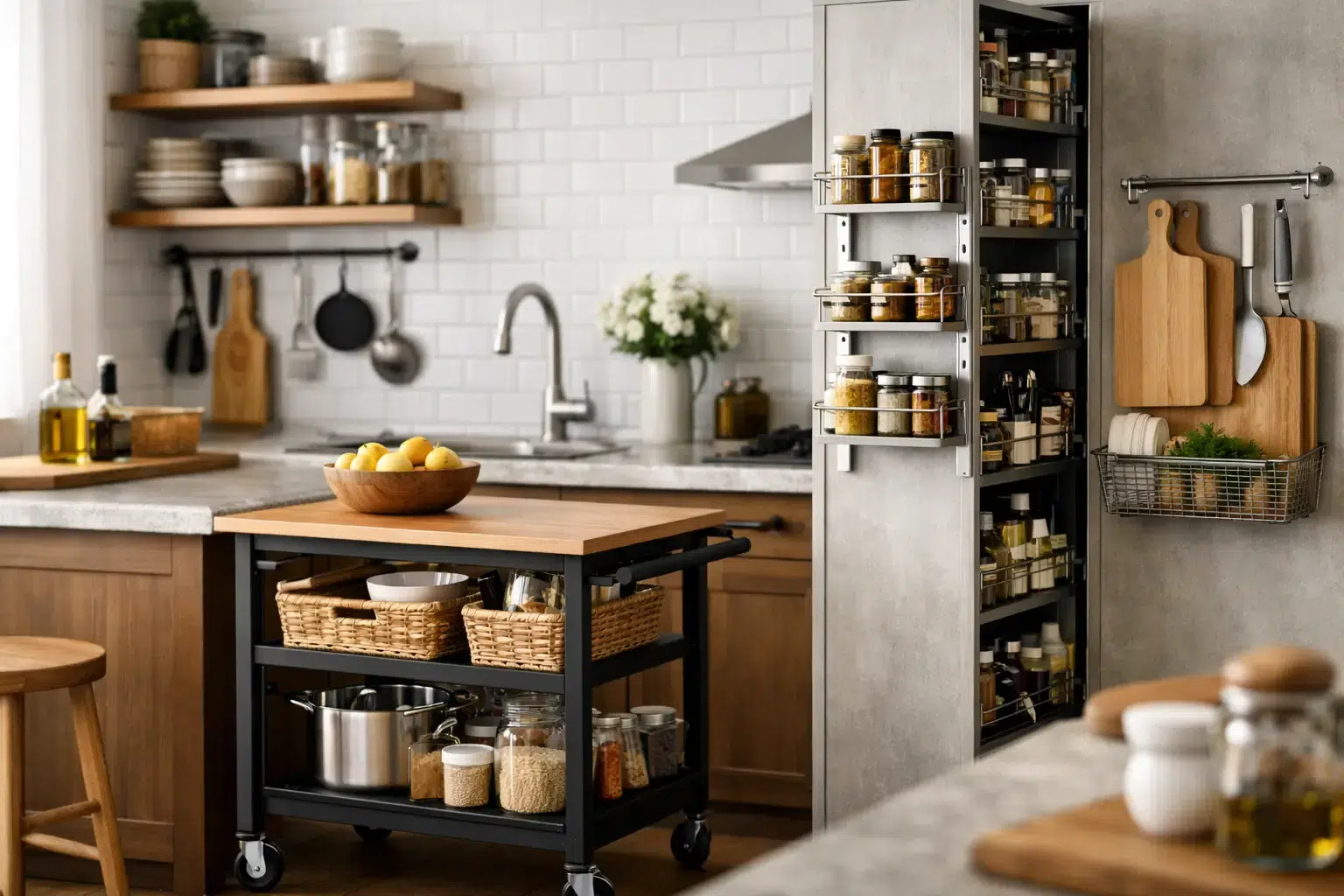
The frustration usually appears at the busiest time of day: pots stacked on the counter, groceries with nowhere to go, and a drawer that will not close because it holds everything from utensils to batteries. Learning how to add kitchen storage does not always mean tearing out a functional kitchen. In many Barrie and Simcoe County homes, the right cabinet upgrades, thoughtful organization, and targeted custom solutions can make the room feel calmer and far easier to use.
The best starting point is not buying containers or adding a shelf at random. It is understanding where your kitchen slows you down and why. A good storage plan puts everyday items within easy reach, gives less-used items a proper home, and makes full use of the cabinets you already have.
Start With the Storage Problems You Actually Have
Before changing cabinetry, spend a few days noticing what stays on the counter and what gets buried in the back of a cupboard. Counter clutter is often a sign that storage is inconvenient, not that you own too much. If the toaster has no practical home, it will stay out. If lunch containers are mixed with cookware, that drawer will always feel crowded.
Think about how your household uses the room. A family that cooks most nights needs accessible space for pots, pans, food storage containers, and groceries. A couple who enjoys entertaining may need a better place for serving pieces, glassware, and small appliances. Homeowners preparing to sell may benefit most from a clean, organized appearance that helps the kitchen show well.
It also helps to divide your belongings into three groups: items used daily, items used weekly, and items used only occasionally. Daily items should live in the easiest-to-reach spaces. Seasonal platters, specialty baking tools, and holiday serving pieces can be stored higher up or deeper in cabinets.
How to Add Kitchen Storage Inside Existing Cabinets
The space inside a cabinet is often more valuable than the cabinet itself. Traditional shelves can leave a large amount of unused room above short items and force you to crouch down to find what is at the back. Interior accessories solve that problem without necessarily changing the entire kitchen layout.
Replace Deep Shelves With Pull-Out Storage
Pull-out shelves are one of the most practical upgrades for lower cabinets. Instead of removing everything in front to reach a frying pan or canned goods at the back, the shelf comes out to you. This is especially helpful for homeowners who find bending and reaching uncomfortable.
Full-extension drawer boxes can provide the same advantage. They work well for cookware, dishes, pantry items, and containers because the contents are visible at a glance. Drawers typically cost more than fixed shelving, but the improvement in day-to-day use can be considerable. The best choice depends on the condition and size of your current cabinets, as well as your budget.
Make Corners Useful Again
Corner cabinets often become places where items disappear. A Lazy Susan, kidney-shaped pull-out, or other corner-access system can turn this awkward area into dependable storage for pots, small appliances, or pantry staples.
Not every corner needs an expensive mechanism. If the cabinet is only used for occasional items, a simpler solution may be enough. However, when a corner is part of your main cooking zone, easier access can make a noticeable difference every day.
Add Vertical Dividers Where They Matter
Baking sheets, cutting boards, serving trays, and pot lids are difficult to stack neatly. Vertical dividers inside a cabinet keep them upright, separated, and easy to grab. A narrow cabinet beside the oven or near the prep area is often an ideal location.
Dividers are a small change, but they prevent the familiar crash of pulling one pan from the bottom of a pile. They also protect cookware and make it easier to maintain an organized cabinet over time.
Use the Walls and Open Areas Carefully
When cabinets are full, look at the unused areas around them. A shallow pantry cabinet, a narrow pull-out beside the refrigerator, or an added bank of upper cabinets can create meaningful storage without changing the room’s entire footprint.
Floor-to-ceiling pantry cabinetry is particularly useful in kitchens that lack a separate pantry. It keeps dry goods, paper products, and small appliances contained behind closed doors, which helps the room look tidy. In a smaller kitchen, however, tall cabinetry can feel heavy if it takes away needed counter space or makes the room appear crowded. Careful design and door colour selection matter.
Open shelving can be attractive for frequently used mugs, bowls, or cookbooks, but it is not the right answer for every household. It requires regular tidying and cleaning, and it can make a busy kitchen look more cluttered. Closed cabinetry is often the better choice when the goal is to store more while keeping the space visually calm.
Create Storage Zones That Match Your Routine
A kitchen works best when storage follows the flow of cooking rather than the original cabinet layout. Place dishes and cutlery near the dishwasher to simplify unloading. Keep pots, pans, and cooking utensils close to the range. Store knives, cutting boards, and mixing bowls near your main prep counter.
The same principle applies to groceries. If possible, keep dry food together in a dedicated pantry cabinet or pull-out. Avoid scattering snacks, cereal, baking supplies, and canned goods across several cupboards. A single, well-organized food zone makes shopping lists easier and helps prevent forgotten items from expiring at the back.
Consider a dedicated small-appliance zone as well. Coffee makers, blenders, air fryers, and mixers take up considerable counter space when there is no logical place to store them. A deeper cabinet, appliance garage, or pull-out shelf can keep these items close at hand without leaving them on display.
Consider Cabinet Refacing With Storage Upgrades
If your cabinet boxes are solid but the doors look dated, refacing can be a sensible way to improve both the appearance and function of the kitchen. New doors, drawer fronts, and exterior finishes create a refreshed look, while selected cabinets can be modified to include pull-outs, drawers, organizers, or new pantry storage.
This approach is often less disruptive and more cost-effective than a complete cabinet replacement. It does have limits. Major layout changes, badly damaged cabinet boxes, or a kitchen that lacks enough cabinetry altogether may call for new cabinets instead. An experienced kitchen professional can help determine which option gives you the best value for your home.
For homeowners who need a more substantial change, custom or locally made standard cabinetry can fill gaps that older kitchens commonly have. A purpose-built pantry, a cabinet over the fridge, or a better-designed island can add storage while making the kitchen feel intentional rather than patched together.
Do Not Forget Drawers, Waste, and Cleaning Supplies
Some of the most useful storage improvements are the ones that support the less glamorous parts of kitchen life. A double pull-out waste and recycling cabinet keeps bins out of sight and frees up floor space. A shallow drawer organizer prevents utensils from becoming a jumble. Under-sink pull-outs can make cleaning products easier to find without placing them where children can access them.
An island can also be a strong storage addition if the room has enough clearance around it. It may hold deep drawers, shelves for cookbooks, or cabinets for serving ware. In a tight kitchen, though, an oversized island can restrict traffic and make the room less comfortable. Storage should improve movement, not get in the way of it.
Plan for a Kitchen That Stays Organized
More storage only helps if it is easy to maintain. Give each category of item a clear home, and avoid filling every cabinet to its limit. A little empty space makes it easier to put things away and prevents clutter from returning to the counters.
At Barrie Kitchen Saver, storage planning is treated as part of creating a kitchen that suits the people who use it. Whether a few interior upgrades are enough or your home would benefit from refaced or new cabinetry, the goal is the same: quality workmanship, practical choices, and a kitchen you can enjoy using every day.
A well-planned storage improvement should make the small moments easier. When the right pan, dish, or pantry item is exactly where you expect it to be, the kitchen starts working with your household instead of against it.