
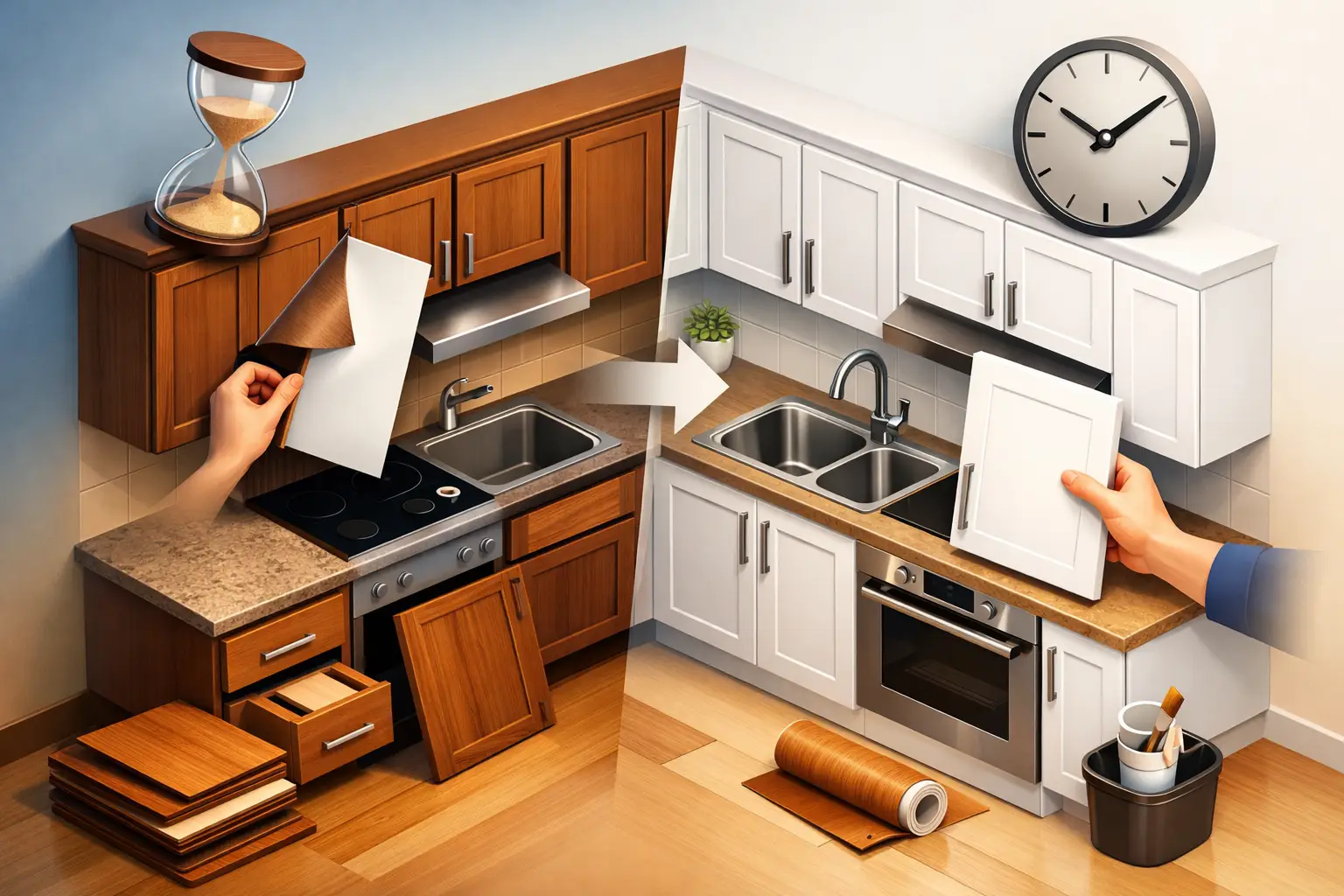
A dated kitchen does not always need to be torn out to feel new again. If your cabinet boxes are solid, level, and well built, refacing can give them a completely updated appearance while preserving the structure that is already working. But homeowners reasonably ask: how long does cabinet refacing last? With quality materials, professional installation, and ordinary care, a well-refaced kitchen can commonly last 10 to 20 years or longer.
The real answer depends on the condition of your existing cabinets, the products selected, and how the kitchen is used. Refacing is not simply a cosmetic shortcut. Done properly, it is a lasting renovation choice for the right kitchen.
How Long Does Cabinet Refacing Last?
Most professionally refaced cabinets will provide 10 to 20 years of service. In kitchens with solid cabinet boxes, carefully fitted doors and drawer fronts, and durable surface materials, they may continue to look good well beyond that range.
Cabinet refacing involves applying a new finish material to the visible cabinet frames, then installing new doors, drawer fronts, hardware, and often new mouldings or trim. The cabinet boxes remain in place. Their condition is therefore the foundation of the entire project.
A refaced kitchen can have a lifespan similar to many new mid-range cabinet installations. What it cannot do is correct cabinet boxes that are badly water-damaged, weak, out of square, or poorly installed in the first place. An honest assessment before work begins makes the difference between a result that lasts and one that only looks good for a short time.
The Condition of Your Cabinet Boxes Matters Most
The doors are what people see first, but the cabinet boxes carry the weight of dishes, cookware, drawers, and countertops every day. Strong plywood or solid wood boxes in good condition are excellent candidates for refacing. Even older cabinets can be remarkably well made, particularly if they have been kept dry and properly maintained.
Before recommending refacing, a professional should check that the boxes are securely attached to the wall, level, structurally sound, and free from significant swelling or deterioration. The hinges, drawer openings, and face frames should also be examined.
Some concerns can be addressed during a refacing project. New hinges, upgraded drawer slides, replacement drawers, and added storage features can improve daily function. However, widespread water damage under the sink, crumbling particleboard, major sagging, or cabinets that no longer suit the layout may point to replacement rather than refacing.
That is not bad news. It simply means the best long-term solution may be custom or new cabinetry designed for the space. The goal should always be a kitchen you can rely on, not a renovation that overlooks an underlying problem.
Material Quality Has a Direct Effect on Lifespan
Not all refacing materials perform alike. Quality doors, drawer fronts, veneers, adhesives, and hardware are worth careful consideration because they are the elements exposed to daily use.
Thermofoil doors can provide a smooth, consistent finish and are easy to clean. They are often a practical choice for homeowners who want a clean, modern look at a manageable cost. Their long-term performance depends on product quality and limiting exposure to excessive heat and moisture.
High-quality laminate and other durable manufactured finishes can also offer excellent performance, particularly where a consistent colour or textured look is desired. The key is proper fabrication and installation. Edges, seams, and corners must be carefully finished so moisture cannot work its way underneath the surface.
Hardware deserves the same attention. Soft-close hinges and full-extension drawer slides improve the feel of the kitchen, but they also reduce the repeated impact that can loosen doors and drawers over time. A small upgrade here often pays off every day.
Installation Quality Protects the Investment
Refacing is detailed work. The new materials must fit closely around cabinet frames, appliances, corners, and walls that may not be perfectly straight. Doors need to be aligned, drawer fronts spaced evenly, and hardware installed securely.
When the work is rushed, small problems can become visible quickly: uneven gaps, lifting edges, doors that rub, or drawers that do not close properly. These issues affect more than appearance. Misaligned components place extra stress on hinges, slides, and finished surfaces.
Professional installation is also less disruptive than a full kitchen demolition. Since the existing cabinet boxes stay in place, homeowners can often avoid much of the dust, removal, and extended downtime associated with a complete replacement. That benefit should never mean cutting corners on workmanship. Careful preparation and precise fitting are what allow a refaced kitchen to look polished for years.
Everyday Habits That Help Refaced Cabinets Last
Cabinet refacing is designed for real family kitchens, not showrooms. Still, a few simple habits help protect the finish and hardware.
Wipe spills promptly, especially around the sink, dishwasher, and coffee station. Water is the most common enemy of cabinet materials, particularly where it can sit along an edge or seep into a seam. Use a soft cloth with mild soap and water for routine cleaning, then dry the surface rather than leaving moisture behind.
Avoid abrasive powders, harsh scouring pads, and strong chemical cleaners unless the manufacturer specifically recommends them. These products can dull finishes, scratch surfaces, or affect the sheen of painted and thermofoil doors.
Heat also deserves attention. Use the range hood while cooking, and be mindful when opening a dishwasher immediately after a hot cycle. Direct blasts of heat and steam are tough on any cabinetry over time. If a cabinet is close to a heat source, appropriate protection and careful product selection are especially important.
Finally, do not ignore small adjustments. A loose handle, a hinge that needs tightening, or a drawer that has begun to rub is usually a simple service item. Addressing it early prevents unnecessary wear.
When Refacing May Not Be the Best Long-Term Choice
Refacing is a smart solution when you like the footprint of your kitchen and the existing cabinets are sound. It can also work well when you want to update doors, colours, hardware, countertops, or storage without taking on the cost and disruption of a full renovation.
It may be less suitable if your kitchen has a layout that creates daily frustration. If you need to move walls, relocate plumbing, add substantially more cabinetry, or improve a poor work triangle, new cabinets may offer better value over the long term. The same is true if cabinet boxes have serious structural or moisture issues.
There is also a middle ground. Many homeowners choose refacing while adding a new pantry cabinet, island, desk area, or custom storage solution. This approach can preserve the strong parts of the kitchen while improving the areas that no longer meet the household’s needs.
Questions Homeowners Often Ask
Will refaced cabinets look like new cabinets?
Yes, when the cabinet boxes are in good condition and the work is professionally completed. New doors, drawer fronts, finishes, trim, and hardware transform the visible parts of the kitchen. Most guests will notice the updated design, not whether the original cabinet boxes were retained.
Can I change the style during refacing?
Absolutely. Refacing can take a kitchen from dated oak to a clean white shaker style, a warm wood finish, or a more contemporary slab-door look. Your available choices depend on the door and finish collections selected, as well as the existing cabinet configuration.
Does refacing add value to a home?
A clean, current, functional kitchen is appealing to buyers and enjoyable for homeowners planning to stay. Refacing can improve the appearance and usability of the space at a more manageable cost than full replacement, provided the finished style suits the home and the workmanship is strong.
For more than 35 years, Barrie Kitchen Saver has helped homeowners in Barrie and Simcoe County make practical, confident decisions about their kitchens. The right choice starts with looking closely at what you already have. If your cabinet boxes are solid, refacing can be a durable way to create a kitchen that feels renewed, functions better, and remains a space you are proud to come home to.