
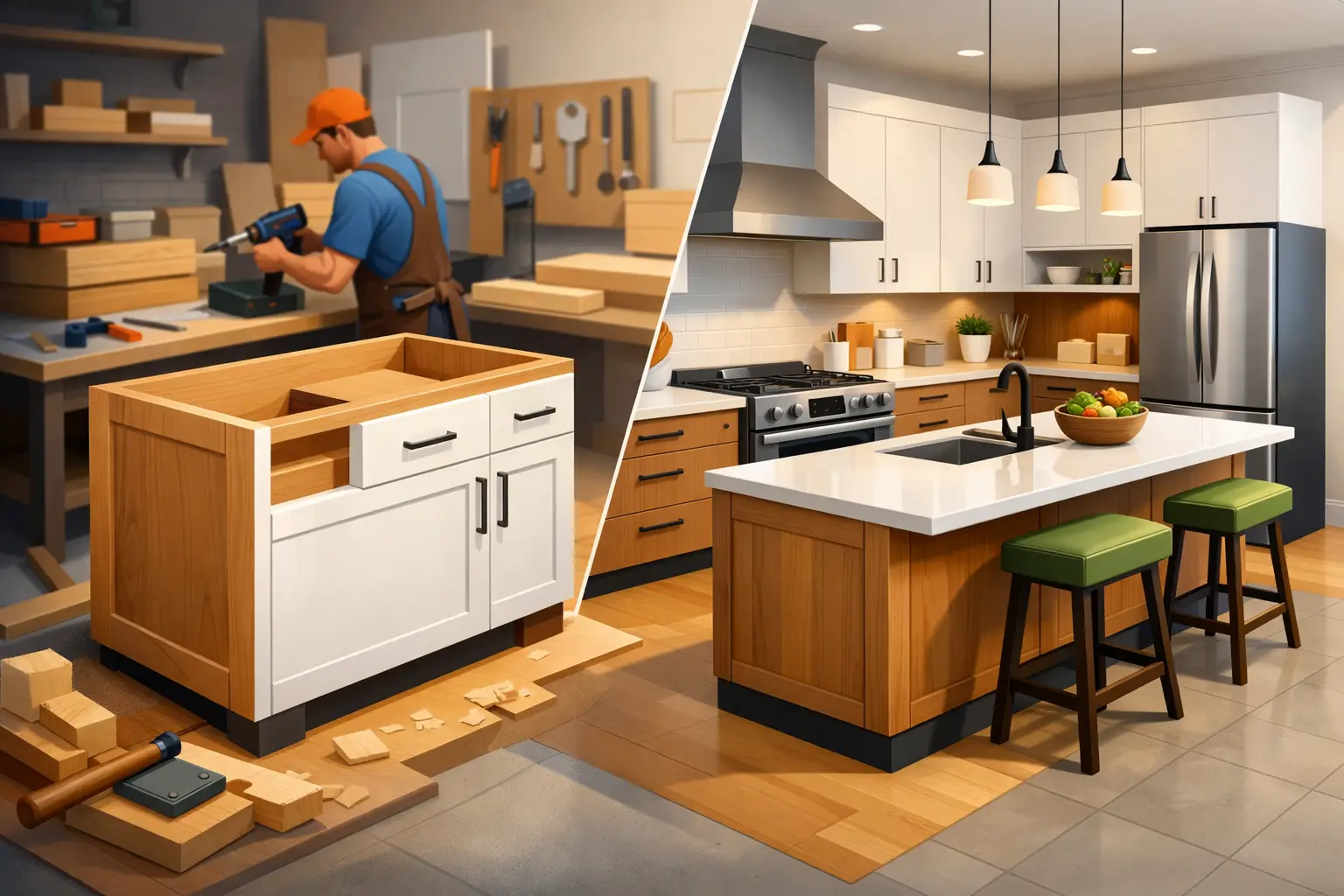
A kitchen can look dated long before it stops working. Doors may sag, drawers may stick, and wasted corner space can make everyday cooking feel harder than it should. For homeowners planning an update, locally made kitchen cabinets offer a practical way to improve the room with more confidence, better support, and choices that suit the way your household actually lives.
Choosing cabinetry is not only about finding a colour you like. It affects storage, workflow, durability, the schedule of your renovation, and how comfortable you feel with the people working in your home. Local manufacturing and local service can make those decisions more straightforward, especially when you have an experienced renovation team helping you compare the options.
What Locally Made Kitchen Cabinets Change
The greatest benefit of buying locally is often access to real people who understand the product and the homes they are working in. Barrie and Simcoe County homes come in many styles, from compact bungalows and century properties to newer family homes with open-concept kitchens. A cabinet plan that works beautifully in a large new build may not suit an older kitchen with uneven walls, limited light, or a narrow footprint.
Locally made cabinetry gives homeowners a closer connection between the design conversation, the cabinet order, and the final installation. If a question arises about a finish, a cabinet size, or a storage feature, there is usually a clearer path to getting an answer. That matters when you are making a long-term investment in one of the busiest rooms in your home.
It can also make it easier to see what you are buying before work begins. A showroom visit lets you compare door profiles, finishes, hardware, and cabinet construction in person. Paint chips and online photos are useful starting points, but they do not always show how a colour will read beside your flooring or in the changing natural light of your kitchen.
Local does not mean every decision will be instant or that every cabinet will cost less. Custom work, specialty finishes, and complex layouts can require additional lead time and a larger budget. The value is in having knowledgeable guidance, dependable communication, and cabinetry selected for your room rather than a one-size-fits-all approach.
Locally Made Kitchen Cabinets Are Not Always Fully Custom
Homeowners sometimes hear “locally made” and assume they must choose between a costly custom kitchen and basic stock cabinets. In reality, there is a useful middle ground. Standard cabinet lines can provide excellent quality, attractive styles, and a range of sizes at a more manageable price. Custom cabinetry can then be used where it makes the most difference.
For example, a standard cabinet plan may work well for most of the kitchen, while a custom pantry, appliance surround, or shallow cabinet solves a specific problem. This approach can preserve the polished, tailored look homeowners want without putting every cabinet into the highest price category.
Standard cabinets can be a smart starting point
Well-made standard cabinets are often ideal when the room has a fairly straightforward layout and your priorities are reliable storage, updated style, and good value. They offer consistent construction and a broad selection of door styles and colours. For a homeowner replacing dated cabinetry before selling, or for a family that needs a functional update without an extensive redesign, this can be an excellent fit.
Custom cabinets solve the hard-to-fit spaces
Custom options earn their place when a kitchen has unusual dimensions or when storage needs are highly specific. A tight wall beside a refrigerator, a sloped ceiling, or an awkward corner can become useful space with a cabinet designed for the opening. Custom work is also helpful when you want features such as a charging drawer, a dedicated baking centre, deeper drawers for cookware, or storage that makes a kitchen easier to use as mobility needs change.
The right choice depends on your layout, your budget, and the goals of the renovation. A trustworthy cabinet professional should explain the difference clearly instead of steering every homeowner toward the most expensive option.
The Value Is in the Fit, Not Just the Finish
A beautiful door style cannot correct poor planning. Before choosing finishes, consider how you move through the room. Where do groceries land when you come home? Is there enough prep space near the cooktop? Are everyday dishes close to the dishwasher? Does the garbage pullout sit where it is useful without blocking a walkway?
These small details are what make a renovated kitchen feel easier to live with. Locally made cabinets can support a more thoughtful plan because the discussion is centred on your home, not simply on filling a standard online order. The goal should be storage that reduces clutter and cabinets that feel intentional from the first morning you use them.
Durability deserves the same attention. Ask about drawer hardware, hinges, interior finishes, cabinet box construction, and how the doors will hold up in a busy household. Soft-close hardware is a popular feature, but good installation and proper adjustment are equally important. Cabinets need to be level, securely fastened, and aligned properly for doors and drawers to perform as they should over time.
Consider Refacing Before Replacing Everything
New cabinetry is a strong choice when the existing layout no longer works, cabinet boxes are damaged, or you are changing the footprint of the kitchen. But full replacement is not always necessary. If your existing cabinet boxes are structurally sound and the layout still serves your household, cabinet refacing may provide the updated look you want with less cost and disruption.
Refacing replaces visible doors and drawer fronts and covers the exposed cabinet frames with a coordinating finish. It can also include new hardware, mouldings, countertops, backsplash updates, and useful storage additions. The result can feel like a complete kitchen transformation while preserving the cabinet structures that are already in good condition.
This is where an honest assessment is valuable. Refacing is not the right answer for every kitchen, and replacement is not automatically the better answer. A careful consultation should look at the condition of the boxes, the practicality of the layout, and what you hope to change. Keeping good cabinet structures out of the landfill can be a sensible decision when it meets your design and functional needs.
Questions Worth Asking Before You Choose
Before committing to a cabinet plan, ask where the cabinets are made, what lead times are expected, and what is included in the quoted price. Clarify whether removal and disposal of existing cabinets, installation, hardware, trim, and any required adjustments are part of the scope.
It is also wise to ask how the team handles surprises that can appear once old cabinetry is removed. Walls may not be square, flooring may need attention, and plumbing or electrical work can affect the schedule. Experienced renovators do not pretend these issues never happen. They explain the process, communicate promptly, and work to keep the project moving with as little inconvenience as possible.
Finally, look for a company that welcomes questions before the job starts. You should feel comfortable discussing budget priorities, storage frustrations, and finish preferences without pressure. A kitchen renovation is easier when the people guiding it listen carefully and explain your choices in plain language.
A well-planned kitchen should continue to feel good after the excitement of new doors and countertops has passed. Whether you choose refacing, standard cabinetry, or a custom cabinet solution, take the time to see the options in person and choose a team with a strong local record. At Barrie Kitchen Saver, that conversation starts with understanding what will make your kitchen work better for you.