
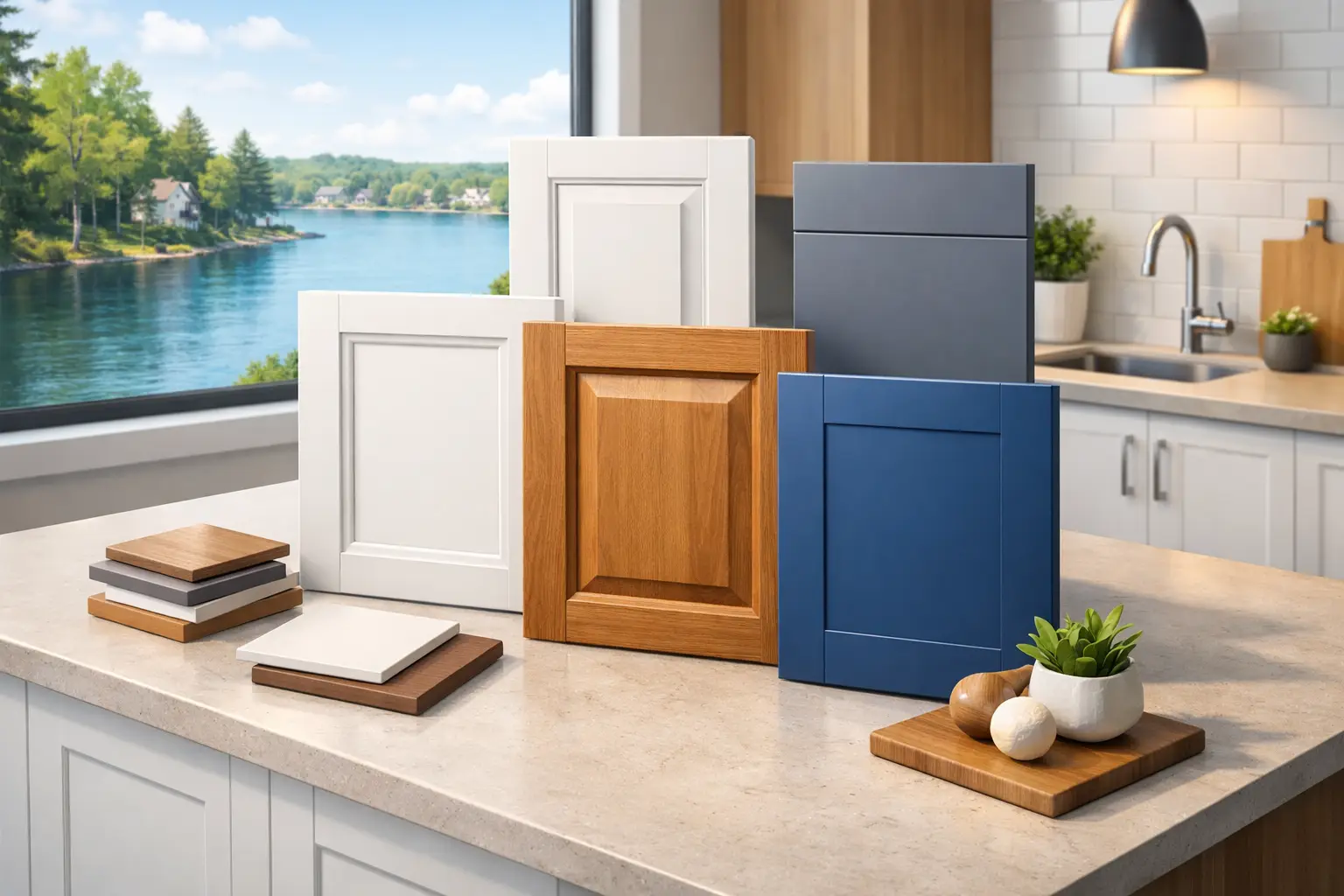
A cabinet door can make a 15-year-old kitchen feel current, or make a newly updated room look out of place. That is why choosing among the best cabinet door styles is about more than following a trend. The right profile should suit your home, your cleaning routine, the amount of natural light in the room, and how long you expect to enjoy the kitchen.
For many homeowners in Barrie and Simcoe County, cabinet refacing offers the opportunity to change the look of the kitchen without removing cabinet boxes that are still in good condition. Whether you are refacing existing cabinetry or planning a full cabinet replacement, the door style will have the greatest visual impact. A showroom visit can help turn samples and photos into a choice that feels right in your own home.
What Makes a Cabinet Door Style a Good Choice?
The best choice is rarely the most decorative door in the display. It is the one that supports the character of your home while working with your practical needs. A busy family kitchen may benefit from a simple profile that is easy to wipe down. A traditional home may call for more detail, while a compact condo kitchen can feel larger with a clean, low-profile door.
Consider the surrounding elements before settling on a style. Flooring, counters, backsplash, hardware, wall colour, and lighting all affect how cabinet doors read in the finished space. A raised-panel door in a warm stain can feel welcoming beside hardwood floors, for example, but may look too heavy in a small kitchen with dark counters and limited daylight.
It also helps to think beyond the kitchen. If cabinetry is visible from a family room, dining area, or front entry, the door style should feel connected to the rest of the home. A well-chosen door does not need to demand attention. It should make the entire room feel settled and intentional.
The Best Cabinet Door Styles to Consider
Shaker doors: a dependable, versatile favourite
Shaker cabinet doors have a flat centre panel framed by clean, simple rails and stiles. They are one of the most requested choices for good reason. The profile works comfortably in traditional, transitional, farmhouse, and contemporary kitchens, depending on the colour, finish, and hardware you select.
White or soft greige Shaker doors can brighten a dated kitchen and provide broad appeal for homeowners preparing to sell. In deeper colours such as navy, charcoal, forest green, or warm brown, the same door style can feel more tailored and substantial. Shaker doors also pair well with practical upgrades such as pull-out storage, drawer bases, and pantry cabinetry.
The trade-off is that the inside edges of the frame need occasional attention when cleaning. It is not difficult, but a slab door has fewer corners to wipe. For most homeowners, the balance of classic appearance and lasting flexibility makes Shaker a very safe choice.
Slab doors: clean lines for modern spaces
Slab doors, sometimes called flat-panel doors, have a smooth, unframed face. Their quiet appearance makes them especially well suited to modern and contemporary kitchens, as well as smaller spaces where visual simplicity matters. They can create a crisp look in white, a warm and natural feel in woodgrain finishes, or a striking focal point in darker colours.
Because the surface is flat, slab doors are among the easiest styles to clean. This can be a real advantage in high-use kitchens and in homes where a streamlined look is preferred. Handle-free options or long, simple pulls often complement the style well.
A slab door can feel too plain in some older or more traditionally detailed homes. That does not make it the wrong choice, but it may need warmer finishes, textured backsplash tile, or more expressive hardware to prevent the room from feeling cold. The finish quality also matters greatly because the broad, uninterrupted surface makes imperfections more noticeable.
Raised-panel doors: traditional detail with presence
Raised-panel doors feature a centre panel that is elevated above the surrounding frame. They bring depth, shadow, and a more formal character to cabinetry. This style is often a natural fit for established homes with crown moulding, detailed trim, warm finishes, or a classic architectural feel.
A raised-panel door can make a larger kitchen feel polished and substantial, particularly when paired with rich wood tones or traditional hardware. It is also a strong option for homeowners who want a kitchen that feels familiar and timeless rather than sharply modern.
The consideration here is scale. In a small kitchen, a heavily detailed raised panel can make cabinetry feel visually busy. Choosing a modest profile and a lighter colour can keep the look welcoming without overwhelming the room. These doors have more grooves than simpler styles, so they also require a little more care during routine cleaning.
Recessed-panel doors: classic without feeling heavy
Recessed-panel doors place the centre panel slightly below the surrounding frame. The result is a more tailored, quieter look than a raised panel, while still offering the depth that many homeowners want. This style works especially well in transitional kitchens, where the goal is to bridge traditional warmth and current design.
Recessed-panel doors can look refined in painted finishes, from warm whites and soft taupes to muted blue-greys. They also suit homes where the kitchen needs to feel updated without looking like it belongs in a completely different house. If you appreciate the appeal of Shaker but want a little more traditional character, this category is worth considering.
Beadboard and V-groove doors: casual character
Beadboard and V-groove doors use vertical lines to add texture and a relaxed, cottage-inspired feel. They are often chosen for farmhouse kitchens, lakeside properties, laundry rooms, or feature areas such as an island or coffee station. Used thoughtfully, they create personality without requiring ornate details.
These styles are usually strongest when they are not overused. A V-groove island paired with simple perimeter cabinet doors can add interest while keeping the kitchen balanced. In a full kitchen, the vertical grooves may collect more dust and cooking residue than a flat door, so they are better suited to homeowners who enjoy the look enough to accept the extra cleaning.
Glass-ready doors: display with restraint
Glass inserts can be added to selected upper cabinet doors in many door styles. They are useful for breaking up a wall of cabinetry, showcasing favourite dishes, or bringing a lighter feeling to a kitchen with darker finishes. Clear, frosted, seeded, or textured glass can each create a different level of visibility.
Glass doors work best as an accent rather than a default. Two cabinets beside a range hood, or a small hutch-style section, may be all that is needed. Keep in mind that clear glass puts stored items on display, so it suits organized cabinets. Frosted or textured glass is more forgiving while still adding depth.
Choose the Profile and Finish Together
A door style is only half of the decision. Colour and finish can make the same profile appear casual, formal, bright, or dramatic. A Shaker door in a warm white feels very different from a Shaker door in a dark woodgrain finish. A slab door in matte cream may suit a soft contemporary kitchen, while high-gloss white creates a much more modern statement.
Homeowners often feel pressure to choose the newest colour. A better approach is to select a finish you will be comfortable seeing every morning for years. Neutral painted cabinetry remains popular because it is adaptable, but warm wood tones and two-tone kitchens can bring welcome character. If the kitchen is modest in size or light, lighter upper cabinets can prevent the room from feeling enclosed, while a darker island can provide contrast.
Hardware should be considered at the same time. Knobs and cup pulls can support a traditional or farmhouse look, while slim bar pulls tend to suit Shaker and slab doors. Hardware is easier to change later than cabinet doors, so it is a good place to add personality without making a permanent commitment.
Refacing Can Change the Look Without a Full Tear-Out
If your existing cabinet boxes are structurally sound and the layout still works for your household, refacing can be an efficient way to achieve the look of new cabinetry. New doors, drawer fronts, and matching exterior finishes can dramatically update the room while avoiding the disruption and cost of replacing every cabinet.
That said, refacing is not the answer for every kitchen. If cabinet boxes are damaged, the layout causes daily frustration, or you need significantly more storage, new cabinetry may provide better long-term value. A professional assessment can help you decide which route makes sense before you commit to a style.
At Barrie Kitchen Saver, homeowners can compare door profiles, colours, and practical storage options in person, then make choices with guidance based on the room they actually have. That personal approach can prevent costly decisions based on a small online image or a passing trend.
The door you choose should make your kitchen easier to live with and more enjoyable to come home to. Bring a few photos of your space, note what bothers you about your current cabinets, and take the time to see samples in different light. A confident choice starts with a style that feels like it belongs in your home.