
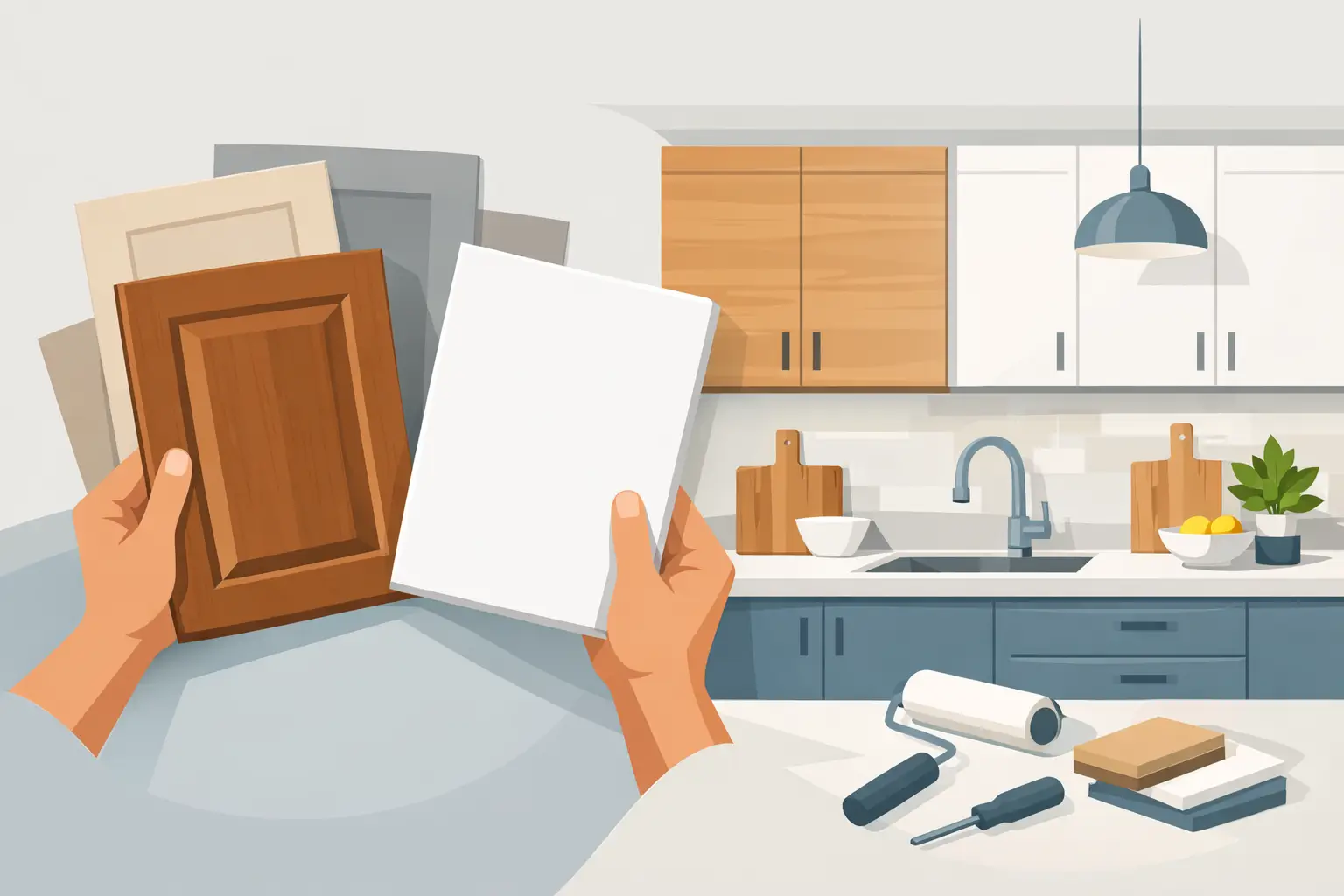
A dated kitchen often shows its age first at the cabinet fronts: worn finish, raised-panel doors from another era, loose hinges, or colours that make the room feel darker than it is. Kitchen refacing doors offer a practical way to change that impression without automatically taking on the cost, mess, and downtime of a complete kitchen replacement.
For many Barrie and Simcoe County homeowners, the cabinet boxes themselves are still solid. If the layout works and the structures are in good condition, replacing the visible doors and drawer fronts can create a dramatic change while keeping the foundation of the kitchen in place. The result can feel like a new kitchen, with a more manageable renovation process.
What Kitchen Refacing Doors Can Change
Cabinet doors cover a large visual area, so their style has a major effect on how a kitchen feels. Swapping outdated doors for a clean Shaker profile, a contemporary slab door, or a more traditional raised-panel option can immediately update the room. New drawer fronts, matching finished panels, and refreshed hardware complete the look.
Refacing is more than simply hanging new doors on old cabinets. A proper project typically includes applying a durable matching finish to the exposed cabinet frames, then fitting new doors and drawer fronts to create a consistent appearance. When done carefully, the cabinetry looks intentional and finished rather than patched together.
The choice of door style also affects the character of the space. Shaker doors remain popular because they work well in both classic and modern homes. Flat-panel doors suit homeowners looking for a simpler, more contemporary appearance.
When Refacing Is a Good Fit
Kitchen refacing doors are best suited to cabinets with sturdy, level boxes and a layout that already serves the household well. If you have enough counter space, your appliances are sensibly placed, and you mainly want a new appearance, refacing can be a smart alternative to removing everything.
It is especially worthwhile when the existing cabinetry is well built. Older kitchens often have strong cabinet structures that do not need to be discarded simply because the doors look dated. Preserving those boxes can reduce demolition, shorten the installation period, and direct more of the budget toward the finishes and features you will see and use every day.
Refacing can also be paired with select improvements. A homeowner may keep most of the existing cabinet layout but add a new pantry, replace a poorly sized cabinet, improve drawer storage, or create a better spot for recycling bins. This approach gives the kitchen a more functional result without requiring a full rebuild.
There are situations where new cabinetry is the better investment. If cabinet boxes are water-damaged, sagging, poorly constructed, or no longer meet your storage needs, refacing may only improve the surface of a larger problem. The same is true when you want to remove walls, relocate plumbing, substantially change appliance locations, or completely redesign the kitchen layout. An experienced renovation professional should assess the condition of the cabinetry before recommending either route.
Choosing Doors That Suit Your Home
The right kitchen door is not just about following a trend. It should suit your home, the amount of natural light in the room, how you use the kitchen, and the level of maintenance you are comfortable with.
Lighter colours can make a compact kitchen feel more open, particularly when paired with simple hardware and a light countertop. They also show marks more readily in busy family kitchens. Darker finishes can add warmth and depth, but they may make a room feel enclosed if there is limited lighting. Mid-tone woods and soft neutrals often provide a comfortable balance and tend to work well with a range of flooring and backsplash choices.
Door profiles matter as much as colour. A detailed traditional profile may be a natural fit in a classic home, while a simple Shaker door offers flexibility if you expect to update paint, hardware, or décor later. Flat-panel doors have a clean appearance and fewer grooves to clean, which can be appealing for homeowners who prefer a low-maintenance kitchen.
Samples are valuable because colours and finishes can look very different under showroom lighting than they do at home. Viewing door options alongside your countertop, flooring, backsplash, and wall colour helps avoid a costly mismatch. This is one reason a showroom consultation can be useful: it gives you the chance to compare materials in person and make decisions with more confidence.
Do Not Overlook Hardware and Drawer Function
New handles and knobs can change the final look of refaced cabinets, but their role is not purely decorative. A comfortable pull can make heavy drawers easier to open, while the right placement can improve accessibility for everyday use. Hardware should feel good in your hand and suit the scale of the doors, not just look attractive on a sample board.
Drawer upgrades are another opportunity to improve function. Soft-close hinges and drawer slides reduce slamming and give the kitchen a more refined feel. Full-extension drawers make it easier to reach pots, containers, and small appliances stored at the back. If your existing drawers are shallow or cluttered, inserts for cutlery, spices, utensils, or waste bins may make a bigger difference to daily use than a purely cosmetic change.
These details should be considered early, especially if storage is one of the reasons you are renovating. A beautiful door style is satisfying, but the kitchen should also make meals, cleanup, and hosting easier.
What the Refacing Process Usually Looks Like
A well-planned refacing project begins with a conversation about your goals. Are you hoping to modernize the room before selling, create a kitchen you can enjoy for the next decade, or improve storage for a growing family? The answer affects the best materials, door style, and scope of work.
Next comes an assessment and careful measuring of the existing cabinetry. The installer needs to confirm that cabinet boxes are suitable for refacing and identify any repairs, modifications, or additions required. This is the time to discuss details such as new crown moulding, finished end panels, valances, cabinet lighting, and replacement countertops.
Once selections are made, doors and components are ordered to fit the kitchen. Installation is generally less disruptive than a full cabinet replacement because the main cabinet structures remain in place. There is still skilled work involved, including preparing cabinet faces, fitting doors, adjusting hinges, and ensuring drawer fronts line up properly. Precision matters. Uneven gaps or poorly adjusted doors can take away from an otherwise excellent renovation.
At Barrie Kitchen Saver, homeowners can compare a broad selection of door styles and colours before moving ahead, with guidance shaped by more than 35 years of local renovation experience. That personal approach helps keep the project focused on what will work best in the home, rather than what happens to be fashionable for one season.
Budgeting for a Refaced Kitchen
Refacing commonly costs less than a complete cabinet replacement because it retains usable cabinet boxes and reduces demolition. However, the final investment depends on the number of doors and drawers, chosen finish, hardware, cabinet modifications, storage accessories, countertop work, and any new cabinetry added to the design.
It is wise to compare proposals based on the full scope, not only the initial price. Ask what is included for cabinet frame finishing, door and drawer-front materials, hinges, hardware installation, modifications, cleanup, and warranty coverage. A clear estimate makes it easier to understand where your budget is going and prevents assumptions later in the project.
The least expensive option is not always the best value if it uses lower-quality components or leaves important finishing work out of the plan. Well-fitted doors, durable materials, reliable hardware, and professional installation contribute to how the kitchen looks and performs over time.
A Fresh Kitchen Without Starting From Scratch
Refacing gives homeowners a thoughtful middle ground between living with a tired kitchen and committing to a complete renovation. When existing cabinet boxes are sound, new doors, drawer fronts, finishes, and storage improvements can make the space feel current, clean, and better suited to everyday life.
Before choosing a colour or door profile, start by looking honestly at how your kitchen works now. A clear view of what should stay, what should change, and what your household needs most will lead to choices you will be happy to live with for years.