
A kitchen can feel worn out long before it actually stops working. If the cabinet boxes are still solid but the doors, drawer fronts, and finishes look dated, many homeowners start asking the same question: what is cabinet refacing process, and is it worth doing instead of a full replacement?
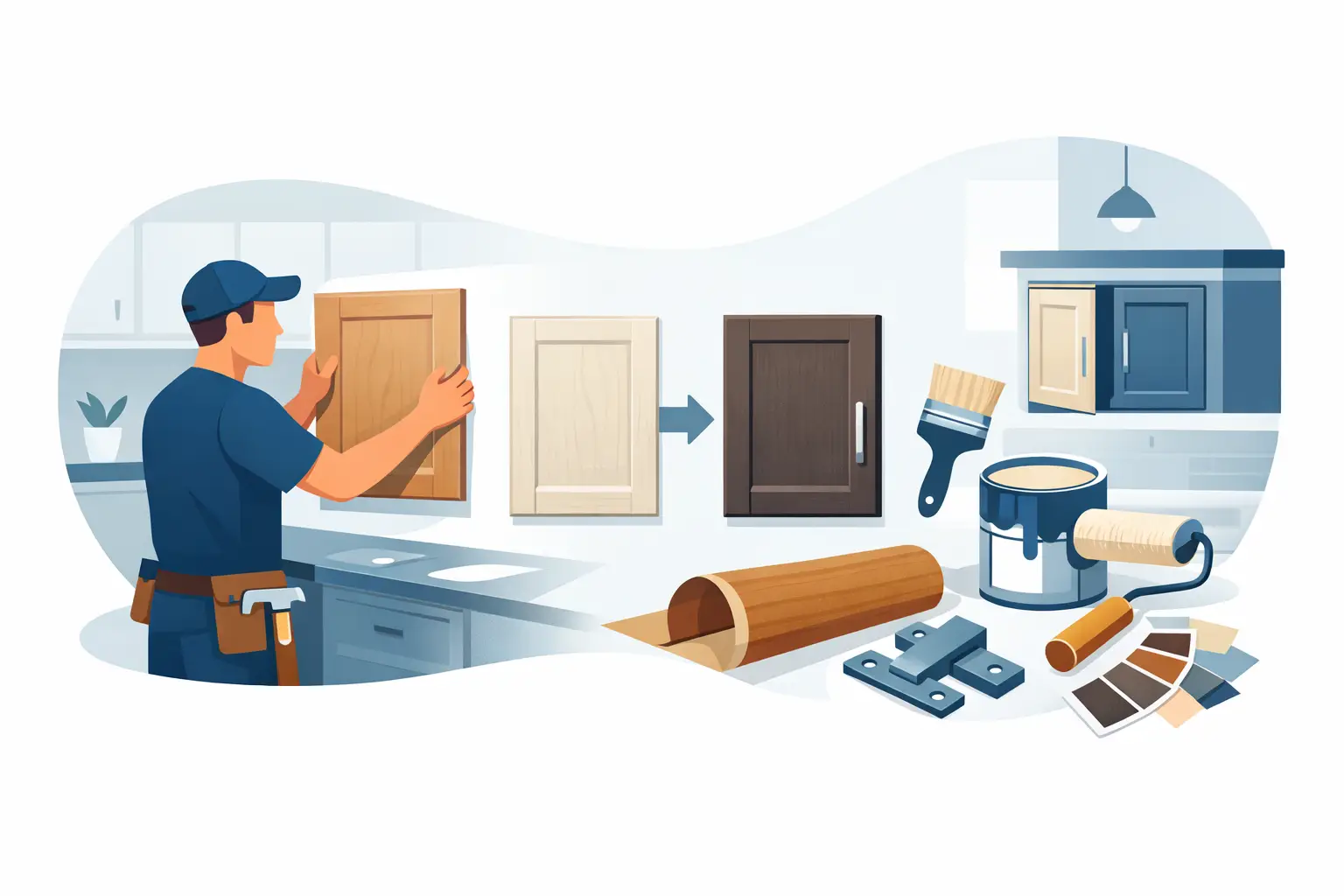
Cabinet refacing is a renovation method that keeps your existing cabinet framework in place and updates the visible surfaces. In most cases, that means removing old doors and drawer fronts, applying new vinyl or matching material to the cabinet boxes, and installing new doors, drawer fronts, hinges, handles, and trim. The goal is to give the kitchen a fresh, finished look without tearing everything out.
What is cabinet refacing process in simple terms?
The simplest way to think about it is this: the structure stays, the appearance changes. If your cabinets are well built, level, and in good condition, refacing can make them look dramatically newer while avoiding the cost and disruption of starting from scratch.
This is why refacing appeals to so many homeowners in Barrie and Simcoe County. You can update the style of your kitchen, improve day-to-day enjoyment, and often save both time and money compared with a full cabinet replacement. It is not the right fit for every kitchen, but when the existing layout still works, it can be a very practical solution.
The cabinet refacing process step by step
A professional cabinet refacing project usually begins with an email estimate from pictures provided or a showroom visit. If the estimate is within the budget a home visit is setup to assess the existing cabinets. The installer checks whether the cabinet boxes are structurally sound, whether there has been water damage, whether shelves and interiors are still serviceable, and whether the current layout makes sense for the household.
Once the cabinets are confirmed as good candidates, product selections come next. Homeowners choose door profiles, colours, hardware, and any upgrades that can improve function. This might include new drawer boxes, pull-out storage, crown moulding, light valance, or matching end panels. This part of the process matters because the final result is not just about replacing old fronts. It is about making the kitchen feel intentionally updated.
After measurements are finalized and materials are ordered, the installation phase begins. Existing cabinet doors, drawer fronts, hinges, and hardware are removed. The exposed cabinet frames and ends are then prepared and covered with a matching vinyl on the face edges and dress gables on the visible cabinet sides so they coordinate with the new doors and drawer fronts. This is where craftsmanship really shows. Clean lines, accurate fitting, and careful finishing are what make a refaced kitchen look polished rather than patched together.
New doors and drawer fronts are installed next, along with updated hinges and handles. Trim pieces are added where needed to complete the look. If the project includes new countertops, backsplash work, or storage accessories, those are coordinated as part of the broader renovation plan. Once installation is complete, the kitchen is cleaned up and the homeowner is left with a space that looks substantially different, even though the original cabinet boxes remain.
What gets replaced and what stays?
This is one of the most common points of confusion. In a cabinet refacing project, the cabinet boxes usually stay. These are the structural units attached to the walls and floor. If they are in good condition, there is no reason to remove them just because the exterior looks tired.
The parts that are typically replaced include the cabinet doors, drawer fronts, hinges, handles, knobs, and exterior finishing surfaces on the front frames and visible ends. In some projects, drawer boxes are also replaced, especially if the old ones are shallow, worn, or not functioning smoothly.
The cabinet interiors usually remain as they are unless the homeowner chooses to paint them while the cabinets are empty. That said, refacing can still be a good opportunity to improve function. Adding rollout trays, deeper drawers, waste pull-outs, or pantry accessories can make an older kitchen work much better without requiring a complete redesign.
When refacing makes sense and when it does not
Refacing works best when the current kitchen layout still serves your needs. If you like where the sink, appliances, and storage are located, and the cabinet boxes are solid, refacing can be an excellent investment. It is also a good fit when the main problem is visual age rather than structural failure.
It may not be the right choice if the cabinet boxes are damaged, poorly built, out of level, or affected by moisture. It also may not be ideal if you want to significantly change the kitchen layout, add a larger island, relocate appliances, or correct major storage limitations. In those cases, new cabinetry may offer better long-term value.
This is where honest guidance matters. A reputable renovation company will not push refacing if replacement is the smarter answer. Homeowners deserve to know not just what can be done, but what will hold up and deliver the best result.
What are the benefits of cabinet refacing?
For many households, the biggest advantage is value. Refacing typically costs less than a full cabinet replacement because the existing cabinet boxes are reused. Labour is often more streamlined, and there is less demolition involved.
There is also less disruption. Because the basic cabinet structure stays in place, the project can often be completed more quickly than a full kitchen tear-out. For busy families, older homeowners, or anyone trying to avoid a long renovation, that matters.
Appearance is another major benefit. A well-executed refacing job can completely change the style of a kitchen. Traditional oak can become a more current painted finish. Flat, dated doors can be replaced with shaker-style fronts. Old hardware can be swapped for something that feels cleaner and more modern. The kitchen still has the same footprint, but it can feel brighter, more current, and more in line with the rest of the home.
Some homeowners also appreciate the practical side of reusing what is still good. If the cabinet structure is solid, keeping it in place avoids unnecessary waste and makes good use of an existing asset.
What affects the final cost?
Refacing is usually more affordable than full replacement, but pricing still depends on several factors. The number of cabinets matters, of course, but so do the door style, finish, hardware, trim details, and any interior upgrades. A simple door swap is one level of project. A full refacing package with custom accessories, new drawer components, decorative mouldings, and countertop coordination is another.
Kitchen condition can also affect cost. If some cabinet sections need repair before refacing can begin, that work needs to be factored in. The same goes for changes to lighting, backsplash, or surrounding finishes if the homeowner wants the entire room to feel refreshed.
This is why estimates should be based on an actual site visit and clear product selections, not broad online averages. Good planning leads to fewer surprises.
What to expect from the experience
A successful refacing project is not only about materials. It is also about how the work is handled in your home. Homeowners want a renovation company that shows up when promised, protects the space, keeps the jobsite tidy, and communicates clearly from start to finish.
That is especially important with kitchen work, because this is one of the most used rooms in the house. Respectful installation and careful scheduling make a noticeable difference. An experienced local company will walk you through choices, explain what is worth upgrading, and make sure the finished kitchen looks consistent from every angle.
For homeowners who want a fresh look without taking on the full cost and upheaval of a complete remodel, refacing often strikes the right balance. Barrie Kitchen Saver has built its reputation around helping homeowners make those decisions with confidence, based on what truly suits the kitchen rather than what sounds biggest on paper.
What is cabinet refacing process really about?
At its core, it is about keeping what still works and improving what no longer does. It is not a shortcut and it is not a cosmetic cover-up when done properly. It is a specialized renovation approach that relies on sound cabinet structure, careful measurements, quality materials, and skilled installation.
If your kitchen feels dated but the bones are good, refacing may be the upgrade that gives you the best mix of appearance, value, and convenience. The smartest next step is not guessing from photos online. It is having the space assessed properly so you can choose with confidence and move forward knowing the result will feel right in your home.