
A kitchen can feel tired long before it stops working. If your cabinet boxes are still solid but the doors, drawer fronts, and overall style look dated, you may be asking what is kitchen refacing and whether it is the right move for your home.
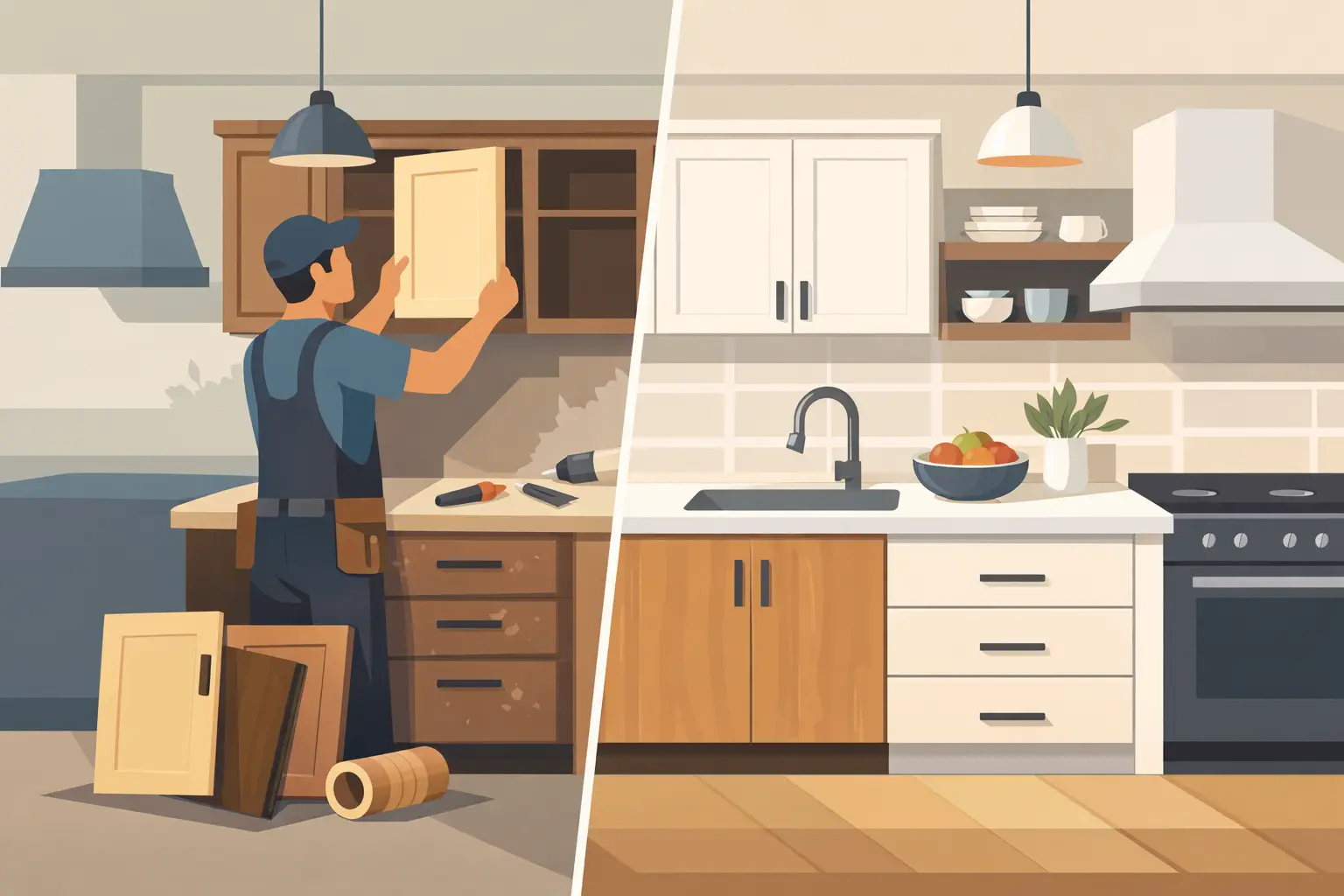
Kitchen refacing is a renovation method that keeps your existing cabinet boxes in place and updates the visible surfaces. In most projects, that means replacing cabinet doors and drawer fronts, applying a matching veneer or laminate to the exposed cabinet frames, and installing new hardware. The goal is to give the kitchen a fresh, updated look without tearing out the entire cabinet system.
For many homeowners in Barrie and Simcoe County, that makes refacing a practical middle ground. It is more substantial than a cosmetic touch-up, but far less disruptive than a full kitchen replacement. When the cabinet layout still works and the boxes are in good shape, refacing can deliver a major visual upgrade at a more manageable cost.
What is kitchen refacing, exactly?
The simplest way to think about kitchen refacing is this: the structure stays, the surfaces change. Your existing cabinet boxes remain where they are. The old doors and drawer fronts are removed, new ones are installed, and the visible ends and face frames are covered to match the new finish.
This is why refacing can look so dramatic once it is complete. What you see every day in a kitchen is mostly the front-facing material – door profiles, drawer faces, colour, finish, and hardware. Change those successfully, and the room can feel entirely different.
That said, refacing is not the same as painting cabinets. Paint changes the colour of what you already have. Refacing usually involves new doors and drawer fronts, which gives you more control over style, finish, and durability. It also tends to create a more consistent, factory-finished appearance.
What is included in a kitchen refacing project?
The exact scope depends on the home and the goals of the renovation, but most refacing projects include several core updates. Cabinet doors and drawer fronts are replaced with new ones in the chosen style and colour. Exposed cabinet frames and end panels are finished to match. New hinges, handles, and drawer pulls are often installed at the same time.
In many cases, homeowners also choose a few functional upgrades while the project is underway. Soft-close hardware, new drawer boxes, pull-out storage, pantry improvements, valances, crown moulding, or updated light rail can all be added if the cabinet structure allows for it. This is where refacing becomes more than a visual refresh. It can also make the kitchen easier to use.
Countertops, backsplash, sink, and flooring are separate decisions. Some homeowners keep them as they are. Others use refacing as part of a broader kitchen update. It depends on budget, condition, and how much change the space really needs.
When kitchen refacing makes sense
Refacing works best when the bones of the kitchen are still good. If your cabinet boxes are sturdy, properly installed, and laid out in a way that still suits your daily routine, there may be no reason to remove them.
This is common in many homes where the kitchen was built well but now looks dated. Oak cabinets from years ago, worn thermofoil doors, old-fashioned profiles, or faded finishes can make the whole room feel older than it is. If the problem is mostly appearance rather than structure, refacing is often worth serious consideration.
It also makes sense for homeowners who want less mess and less downtime. Full cabinet replacement usually means demolition, disposal, and a longer construction process. Refacing is typically cleaner and more contained because much of the original kitchen stays in place.
For sellers preparing a home for market, it can be especially appealing. A dated kitchen can hurt first impressions, but a full remodel may not always make financial sense before listing. Refacing can improve visual appeal in a more targeted way.
When refacing may not be the right choice
Refacing is not the answer to every kitchen problem. If cabinet boxes are water-damaged, poorly built, sagging, or no longer functional, keeping them may not be the best long-term investment.
It is also less suitable when the layout itself needs to change. If you want to move appliances, add an island, open up the room, or significantly improve workflow, full replacement is often the better path. Refacing updates what is there. It does not reinvent the kitchen footprint.
There are also cases where homeowners start with refacing in mind but realize they need more storage or better cabinet sizes than the current setup can offer. In that situation, a mix of solutions may be the smartest approach. Some kitchens benefit from refacing certain sections while adding new cabinetry elsewhere.
The biggest benefits of kitchen refacing
The most obvious benefit is cost savings. Because the existing cabinet boxes remain, there is less material to purchase and less labour involved than with a complete tear-out and replacement. That does not make refacing cheap, but it often makes it more attainable.
Another major advantage is reduced disruption. Homeowners often worry about how long they will be without a working kitchen. Refacing is usually faster than a full renovation, which matters when you are living in the home during the project.
Appearance is the other key reason people choose it. New doors, updated finishes, and modern hardware can change the entire character of the room. A kitchen that once felt dark, dated, or worn can feel brighter, cleaner, and more current without rebuilding everything from scratch.
There is also a sustainability argument. If the existing cabinet boxes are still sound, reusing them avoids sending usable materials to landfill. Many homeowners appreciate that practical kind of waste reduction.
What affects the cost?
The cost of kitchen refacing depends on the size of the kitchen, the number of doors and drawers, the door style selected, the finish, the hardware, and whether any upgrades are added along the way. A simple door swap in a compact kitchen will cost far less than a large kitchen with custom details, storage accessories, and trim work.
Material choice matters too. Different door constructions and finishes come at different price points. The same is true for hardware. A clean, straightforward design can keep the budget under control, while decorative profiles and premium accessories can move the project upward.
This is why estimates need to be specific to the home. Refacing is not one fixed package. It is a custom renovation built around the cabinets you already have and the result you want to achieve.
How to tell if your cabinets are good candidates
A proper assessment starts with cabinet condition. Are the boxes level, secure, and structurally sound? Do the shelves hold weight properly? Is there water damage around the sink base or lower cabinets? Do drawers open as they should, or are they failing because the cabinet itself is worn out?
Then comes the layout question. If the current arrangement frustrates you every day, a new look alone may not solve the real problem. On the other hand, if the kitchen functions well and you simply want it to look newer, refacing may be an excellent fit.
This is where working with an experienced local company matters. A trustworthy contractor will tell you when refacing makes sense and when it does not. Barrie Kitchen Saver has built its reputation on exactly that kind of honest guidance, helping homeowners choose the option that fits their space, budget, and long-term plans.
What to expect from the process
Most homeowners begin with a consultation and measurement. From there, finishes, door styles, colours, and hardware are selected based on the look you want and the condition of the existing cabinetry.
Once materials are ordered, installation is generally straightforward compared with a full renovation. Old doors and drawer fronts come off, visible cabinet surfaces are prepared and finished, and the new components are installed and adjusted. If storage accessories or trim details are part of the plan, they are completed as part of the same process.
A good installer also pays attention to the parts homeowners notice most – clean workmanship, tidy job sites, proper alignment, and doors that open and close smoothly. Those details are what make the finished kitchen feel professionally done rather than simply updated.
Is kitchen refacing worth it?
If your cabinet boxes are solid, your layout still works, and your main complaint is that the kitchen looks old, refacing can be an excellent investment. It gives you a strong visual transformation without the full cost and disruption of starting over.
If your kitchen has deeper issues – poor storage, bad workflow, damaged cabinetry, or a layout that no longer fits your life – then a larger renovation may serve you better. The right answer depends on what you are trying to fix.
For many homeowners, the value of refacing is not just in saving money. It is in making a practical decision that respects the home, the budget, and the fact that not every kitchen needs to be torn out to feel new again. If your kitchen still has good bones, a well-planned reface may be all it needs to feel like a space you are proud to walk into every day.